



Red-Flag Analysis & Risk Report: Identify the most important contract risks in minutes and report them cleanly
New contracts often land on your desk at the worst possible time: Procurement wants a quick sign-off, Sales needs a go-ahead, or a client expects an assessment on short notice. In moments like these, it is crucial to spot the truly critical risks immediately – not after the third read-through.
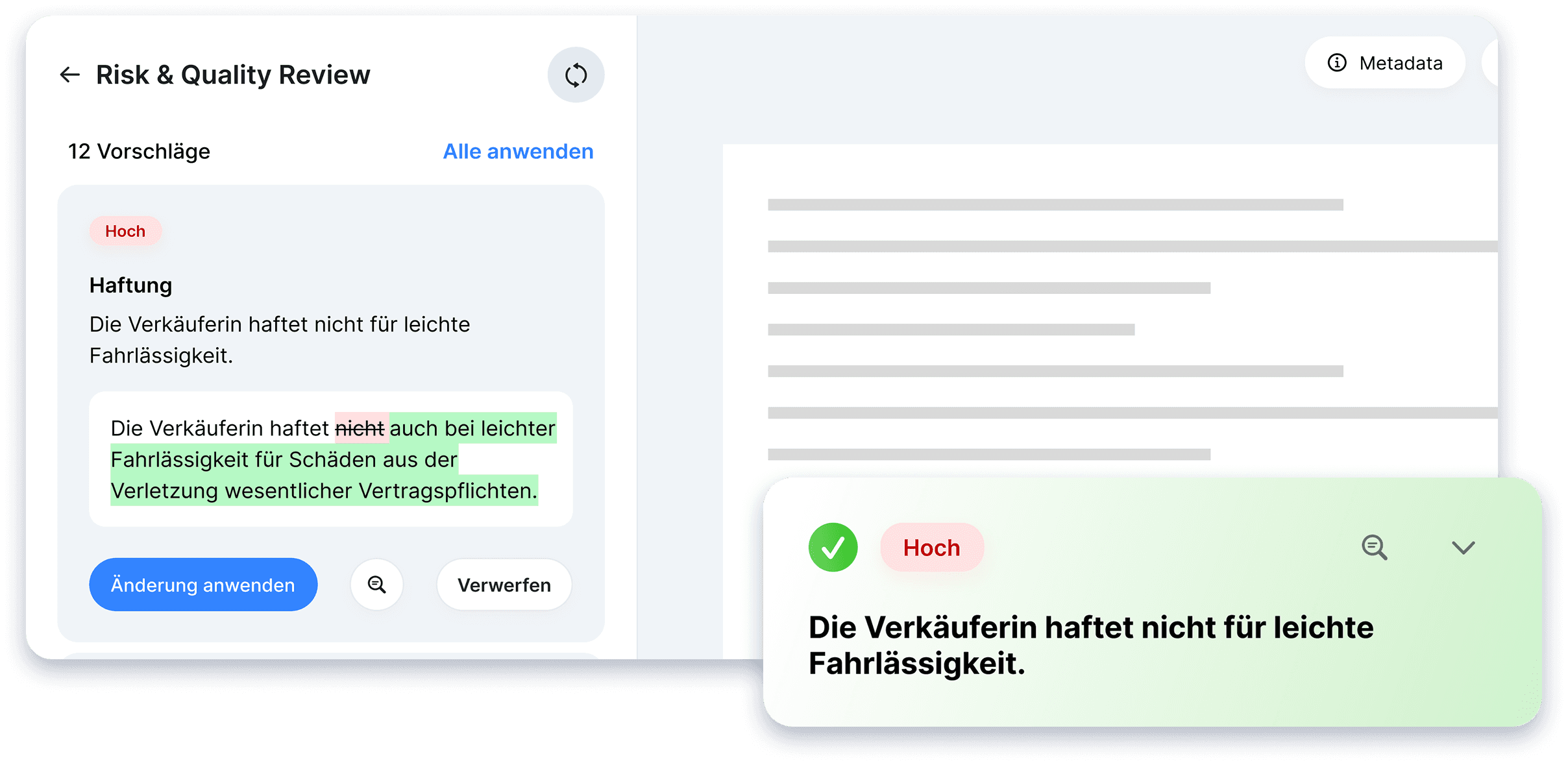
With CASUS Risk & Quality Review, you get a fast, structured overview of contract risks, prioritized by severity and topic. And if you need to share the outcome internally or with clients, CASUS generates a standardized Risk Report as a PDF – including references, so every statement remains traceable back to the document.
CASUS Review is available where contract work actually happens – in Microsoft Word. That means you can run a red-flag analysis and structured risk review directly on the document, jump to the exact passages that need attention, and address findings or refine recommendations right in place – without switching tools or copying content back and forth. You stay in the contract, keep full context, and move from prioritized risks (High/Medium/Low) to clean, traceable edits in one continuous workflow.
Why red flags make the difference in reviews
Contract review is not just reading once and highlighting, but above all prioritizing correctly. In practice, it often comes down to questions like:
Which clauses are truly risky for us?
What is unusual in the market and therefore negotiation-relevant?
Where is it worth investing energy in changes – and where is it not?
A strong red-flag analysis helps you answer exactly that quickly and document it clearly.
Use Case 1: Instant red-flag analysis of new contracts
CASUS Review analyzes the contract automatically, identifies risks, and categorizes them by severity (High / Medium / Low) as well as by topic clusters. The result is not a messy output, but a priority list you can act on immediately.
What CASUS typically identifies:
Red flags in key areas such as liability, termination, IP, data protection, warranties
(e.g., liability without a cap, one-sided termination rights, unclear IP ownership)
Market-atypical or unusual clauses that often become negotiation points
(e.g., very long commitment periods, extensive warranties, aggressive indemnities)
Concrete change suggestions, including an indication of where the relevant section is in the contract
The practical advantage: you can immediately explain internally what is critical, why it is critical – and how you would address it. Especially with high volume or tight timelines, this brings noticeable calm and clarity to the process.
Use Case 2: Create and share a complete Risk Report as a PDF
Many legal teams face the same recurring issue: the review is done, but the insights are hard to pass on. They live in someone’s head, are scattered across track changes, or sit in an email no one can find later.
CASUS Review solves this with a standardized report that works both internally and externally. The report typically includes:
Severity, topic, description, recommendation, and detailed findings
References/citations so every statement can be checked quickly in the contract
PDF export as a clean, reusable standard output
(e.g., for in-house reviews, management updates, or client reports)
This creates an output that looks professional, is easy to verify, and can become a template standard in your workflow.
Who is this feature especially helpful for?
This setup shines wherever speed and clarity matter, for example:
In-house legal teams handling many NDAs, supplier contracts, or customer agreements
Law firms that want to provide structured client reports
Teams with multiple reviewers who need consistent quality and clear prioritization
Conclusion
With CASUS, you combine two things that matter most in contract review: fast prioritization (red flags by severity) and clean communication (a standardized risk report as a PDF with references). This saves time in analysis, reduces unnecessary iterations – and simultaneously increases the quality of your internal or client-facing documentation.
FAQ
How does a red-flag analysis differ from a “normal” contract review?
Red-flag analysis is designed for prioritization: it highlights the most critical issues first (High/Med/Low) and gets you to action faster – especially under tight timelines.
Are the findings traceable, or do you have to verify everything manually?
Findings include references so you can verify every statement directly in the contract. This is particularly important for internal approvals and client communication.
Does this replace legal review?
It does not replace legal judgment, but it significantly accelerates and structures the process: risks become visible faster, are prioritized, and are documented cleanly – so lawyers can focus on the points that truly matter.


